Teaching biblical history to children can begin with a simple distinction: the biblical text, the ancient world around it and the conclusions people draw from the surviving evidence are related, but they are not the same thing.
A child does not need to become a historian to ask useful questions.
Where did this take place? What does the passage actually say? What kind of writing is it? What objects, inscriptions, manuscripts or places survive from the wider period? Which parts are clear, and which parts are debated?
Those questions can make family learning more careful without requiring adults to pretend that every historical problem has already been solved.
Start with the biblical text
The most useful starting point is usually the passage itself.
Before adding timelines, archaeology or commentary, read enough of the surrounding text to see what kind of claim it is making.
A Psalm, genealogy, law, prophetic speech, letter, parable and narrative do not all work in the same way.
Children can be introduced to that distinction in ordinary language:
- What is happening in this passage?
- Who is speaking?
- Who is being addressed?
- Where does the text say this happens?
- Does the passage tell a story, give a command, sing a poem or explain an idea?
Those questions keep the source in view before modern interpretation is added.
Use readiness rather than rigid age bands
Children differ in reading ability, interests, prior knowledge and confidence.
There is therefore no universal age at which every child should begin timelines, manuscript study or historical debate.
A more flexible approach is to offer different levels of detail.
For children who prefer stories and pictures
Begin with a short passage, a simple map or an image of the landscape or an ancient object connected with the wider period.
Keep the historical addition small.
For example:
- find Egypt, Jerusalem or Babylon on a map;
- look at what houses, tools or writing materials from the wider region could look like;
- notice whether the passage mentions farming, travel, kings, cities or temples;
- ask one question about how life then differed from life now.
The activity is an optional modern teaching aid, not a proven developmental prescription.
For children ready for more context
Add chronology, neighbouring kingdoms, trade routes, geography or comparisons between passages.
A child might ask:
- What happened before this passage?
- Which kingdom or empire is mentioned?
- How far did people travel?
- What evidence survives from this wider period?
- Do historians agree about the date or interpretation?
For older or especially interested learners
They may be ready to compare translations, manuscript evidence, archaeological reports and competing scholarly explanations.
The important step is not assigning a particular method to a particular birthday. It is choosing a level of complexity that the learner can follow without pretending uncertainty has disappeared.
Teach five different kinds of information
A simple framework can prevent a great deal of confusion.
When studying biblical history, distinguish between:
- Biblical text: what the passage itself says.
- Other ancient evidence: manuscripts, inscriptions, buildings, objects, coins and other surviving material.
- Historical reconstruction: conclusions historians draw by bringing evidence together.
- Faith interpretation: theological meaning a family or community understands in the text.
- Modern activity: the map, model, drawing, lesson or family practice used today to explore it.
These categories can inform one another, but they should not be collapsed into a single claim.
What can archaeology tell children?
Archaeology can help children encounter the material world of antiquity.
Excavated buildings, pottery, inscriptions, coins, tools and other objects can provide evidence about places, technologies, languages, trade, administration and everyday life.
But archaeology should not be presented as a machine for proving or disproving an entire biblical book.
An individual find may support one historical detail, complicate another question or tell us very little about a particular narrative.
A useful set of questions for an artefact is:
- What is this object?
- Where was it found?
- How was it dated?
- What can it tell us directly?
- What are historians inferring from it?
- What can it not establish?
This allows children to encounter evidence without asking the object to prove more than it can.
Manuscripts can make textual history visible
Ancient manuscripts offer another useful route into biblical history.
Children can understand the basic idea without learning ancient languages first: texts survived because people copied them, and surviving copies can be compared.
The Dead Sea Scrolls provide a particularly visible example because the Israel Antiquities Authority makes high-resolution manuscript images available through its online archive.
Explore the Dead Sea Scrolls archive to see examples of biblical compositions, calendrical writings and other ancient manuscripts.
Looking at a manuscript image does not by itself settle how a passage should be interpreted, but it can help make textual transmission less abstract.
Maps are useful when they remain honest
Maps can help locate seas, rivers, roads, kingdoms, cities and journeys.
They can also create false certainty if a debated route or boundary is drawn as though it were known exactly.
When using a map, distinguish between:
- a place securely identified;
- an approximate region;
- a reconstructed route;
- a proposed location that remains disputed.
A dotted line or question mark can sometimes teach more accurately than a confident solid line.
Timelines need the same care
A family timeline can be useful for seeing sequence, but not every biblical event has an uncontested modern date.
Instead of forcing every event onto one exact year, use broad periods or date ranges where necessary.
A timeline might include topics such as:
- the patriarchal narratives;
- Egypt and the Exodus tradition;
- settlement and the period represented in Judges;
- the monarchic period;
- Assyrian expansion;
- Babylonian conquest and exile;
- the Persian period;
- the Second Temple period;
- the Roman-period setting of the New Testament.
Where a date is disputed, label it as disputed.
The purpose of the timeline is orientation, not making uncertain chronology appear settled.
Creative activities should be labelled as creative activities
Drawing, making models and writing imagined diary entries can all be used as optional modern learning activities.
But they are not ancient evidence.
If a child writes a letter as Ruth, Moses or David, explain that the letter is imaginative work based on the biblical narrative. It is not a recovered historical document and should not be used to fill gaps in what the text actually tells us.
The same applies to model houses, costumes and reconstructions. They can help a family think about the ancient setting, but their details should come from evidence where possible and be labelled as reconstruction where they do not.
Studying ancient time and calendars
Calendars provide one route into questions about ancient agriculture, worship, seasons and the ordering of communal life.
The biblical texts contain months, Sabbaths, appointed times and agricultural references, but they do not present every ancient calendar question as one uniform technical system.
Related Second Temple-period writings add other evidence.
The Book of Luminaries in 1 Enoch, for example, presents an ordered 364-day scheme and describes the movements of the heavenly lights and changing lengths of day and night.
Calendrical manuscripts among the Dead Sea Scrolls provide further evidence of ancient interest in structured cycles of time.
These sources should not be turned into the claim that every ancient Israelite or Second Temple-period group used one identical calendar.
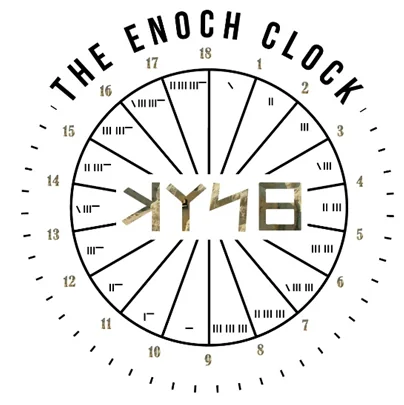
For older learners who want to explore that particular Enochic tradition further, The Master Enoch Clock is a modern system for exploring the 364-day framework. It should remain clearly distinguished from the ancient texts and manuscripts themselves.
Family Scripture reading can remain simple
Historical context does not need to dominate every reading session.
Sometimes a family can simply read the passage.
On another occasion, one question may be enough:
- Where is this place?
- What was happening in the wider region?
- What object or custom in the passage is unfamiliar?
- How do historians know what they claim to know?
The aim is not to turn every family reading into a seminar.
Historical study should serve the reading rather than making the source text disappear beneath background information.
Using child-accessible resources without replacing Scripture
A retelling, illustrated edition or family read-aloud can make an unfamiliar biblical book easier to approach.
It should still be clear that the adaptation and the biblical source are different things.
The Little Book of Deuteronomy: A Child’s First Deuteronomy is one family read-aloud created to introduce children to the movement and recurring themes of Deuteronomy while keeping the full biblical book as the source to return to.
Questions are allowed to remain open
Adults do not need to supply certainty where the evidence does not.
Useful answers can include:
- “The text says this.”
- “This object tells us this much.”
- “Historians disagree about this part.”
- “We do not currently know.”
- “Our family understands the passage this way.”
Those answers distinguish evidence, uncertainty and faith interpretation rather than pretending they are identical.
Teaching biblical history is not the same as proving every story
The phrase “biblical history” can itself cause confusion.
The Bible contains narrative, law, poetry, prophecy, wisdom, letters and other forms of writing.
Historical study asks questions about people, places, dates, societies and events connected with those texts.
That does not mean every passage should be read as the same type of historical report.
It also does not mean that historical investigation decides every theological question.
A useful family habit is to ask two separate questions:
- What is this text saying?
- What can historical evidence establish about its setting or claims?
The answers may overlap, but they are not automatically identical.
A simple family-learning framework
When exploring a passage historically, try this sequence:
- Read: What does the passage actually say?
- Locate: Where does it place the people or events?
- Identify: What objects, customs, rulers or places need explanation?
- Investigate: What other ancient evidence survives?
- Separate: What is evidence, what is reconstruction and what is interpretation?
- Return: Read the passage again with that context in mind.
This is a practical study framework, not a claim that it produces a particular educational, developmental or faith outcome.
Ancient words passed on carefully
Passing ancient texts to children does not require making the past simpler than it was.
A child can encounter Scripture, maps, manuscripts, archaeology and scholarly uncertainty without every question being resolved at once.
The task is smaller: make the source understandable, distinguish what is known from what is inferred, and leave room for questions.
That approach sits naturally with The Enoch Clock’s parent line:
Ancient time. Ancient words. Passed on.
Frequently asked questions
At what age should children begin learning biblical history?
There is no single correct age. Adults can adjust the amount of historical detail to the individual child. One child may enjoy a simple map or picture, while another may be ready for timelines, manuscripts or competing historical interpretations.
What is a primary source?
In historical study, a primary source is evidence produced in or surviving from the period being investigated, such as a manuscript, inscription, coin, letter or other ancient object. The biblical text can also be studied as an ancient textual source. A modern history book or lesson guide is a secondary source rather than an ancient primary source.
Does archaeology prove the Bible?
Archaeology can provide evidence about ancient places, objects, buildings, inscriptions and patterns of life. Individual discoveries may illuminate particular historical questions, but archaeology should not be presented as proving or disproving the Bible as a whole.
Should children learn disputed historical questions?
They can be told that a question is disputed without being given every specialist argument. Simple wording such as “historians do not all agree about this date” keeps uncertainty visible without overwhelming the learner.
Are timelines of biblical history exact?
Not always. Some dates and sequences are much more secure than others. Where chronology is debated, use a range or label the uncertainty rather than presenting one reconstructed date as uncontested fact.
Can children study the Book of Enoch?
Families may choose to explore it according to the child’s interest and readiness. The Book of Luminaries in 1 Enoch is technically demanding, so older or especially interested learners may need a reliable translation and supporting explanation.