Meaningful Christian home wall decor begins with a simple question: what words or images does the household actually want to live with?
For some families, that may mean a carefully chosen Scripture passage. For others, it may be a family photograph, an inherited object, a piece of calligraphy or artwork connected with a particular biblical text.
The value does not come from covering a home in religious decoration. Nor can wall decor be assumed to produce particular faith, learning, memory or family outcomes.
A more useful aim is to choose something whose meaning is understood, whose wording is accurate and whose place in the home feels deliberate.
Start with the Scripture, not the decoration
Bible verse wall art is easiest to choose when the passage comes first.
Before selecting a print, read the whole verse and enough of its surrounding chapter to understand what is being said, who is being addressed and what kind of text it is.
A command, a Psalm, a proverb, a blessing and a letter may all contain words that look attractive on a wall, but they do not all function in the same way.
This matters because a short decorative phrase can sometimes lose an important part of its meaning when it is separated from the passage around it.
Scripture for family life and passing words on
Some biblical passages speak directly about words being remembered, taught or spoken within a household.
Deuteronomy 6:6–9
Deuteronomy 6 describes the commanded words as something to be kept close, spoken about with children and connected with ordinary daily life.
The passage goes much further than wall decoration, but it provides a fitting biblical context for families thinking about what words they keep visible in the home.
Psalm 78:1–7
Psalm 78 speaks about telling a coming generation what has been received from earlier generations.
Families interested in heritage may find the passage useful because its emphasis is on transmission: remembering, speaking and passing knowledge forward.
Joshua 24:15
Joshua 24 includes the familiar declaration concerning Joshua and his household serving the LORD.
It is frequently used in home decor, but the full chapter places the statement within Joshua’s address to Israel and a choice concerning whom they will serve.
Reading that setting before using the verse helps keep the wall text connected to the biblical narrative from which it comes.
Passages about courage, trust and peace
Some households prefer passages concerned with courage, trust or peace.
Joshua 1:9
Joshua 1 speaks to Joshua as he prepares to lead Israel after Moses.
Its language about courage and the presence of the LORD is often used devotionally today, but its original narrative setting should not disappear simply because one line is displayed separately.
Psalm 27:1
Psalm 27 uses images of light, salvation and refuge while the Psalmist speaks about fear and opposition.
A family may choose a line from the Psalm, but reading the whole composition makes the imagery richer than an isolated inspirational phrase.
Philippians 4:6–7
Philippians 4 speaks about prayer, thanksgiving and peace within a wider letter to believers in Philippi.
If only a short phrase is used in artwork, keep the reference visible so the words remain easy to return to in their full setting.
Choose wording carefully
The same Bible verse can look quite different across English translations.
Before ordering or creating Scripture wall art:
- choose the translation deliberately;
- check the chapter and verse reference;
- compare the final wording with the source text;
- make clear if only part of a verse is being used;
- check the translation publisher’s quotation and permissions terms where required.
A remembered wording should not be treated as exact until it has been checked.
This becomes especially important where an artwork is being sold commercially rather than made for private household use.
Full verse or short excerpt?
There is no requirement for Scripture wall art to contain an entire long passage.
A complete short verse can work well. So can one complete clause with the chapter and verse printed beneath it.
The important boundary is meaning.
Do not remove words simply to make a sentence fit a frame if the shortened version changes what the passage says.
If the chosen text only makes sense with the surrounding verses, a smaller print containing more of the passage may be a better choice.
Meaningful Christian home wall decor does not need to fill every wall
Religious meaning and visual quantity are not the same thing.
One carefully chosen piece may suit a room better than several competing Scripture prints.
A household might place a single passage near a reading area, dining space, entrance or another part of the home where the words make sense to the people who use the room.
That is a design choice rather than a spiritual rule.
The aim can remain simple: allow the words enough space to be read clearly and avoid turning the room into a display in which every object competes for attention.
Think about the room before choosing the piece
Placement changes how wall decor is experienced.
A large passage designed to be read from across a room needs different typography from a small framed text beside a chair or bookshelf.
Consider:
- the distance from which the words will normally be read;
- the size of the wall;
- available light and glare;
- the existing objects and photographs in the room;
- whether the frame and fixings are suitable for the wall and location.
Where children are present, avoid placements where a frame, shelf, cord or other object could fall onto them or be pulled down.
Installation should follow the requirements of the actual wall, fixing and product rather than a generic online rule.
Scripture, family history and inherited objects
Meaningful Christian home decor does not have to be newly purchased.
An inherited Bible, a handwritten family passage, an older photograph, a framed letter or a piece connected with a family story may carry significance because its history is known.
When an object is inherited, it can be useful to record what is actually known about it: who owned it, where it came from and why the family kept it.
If part of the story is uncertain, preserve that uncertainty instead of turning family memory into historical fact.
The same principle applies to biblical tradition more broadly: ancient source, later interpretation and modern family application should remain distinguishable.
Christian gifts for the home
Scripture-centred home decor can also be given as a gift, but the safest starting point is the recipient rather than the product.
Before choosing a verse, consider whether you know:
- which Bible translation the household uses;
- whether the passage has particular meaning to them;
- whether the style suits their home;
- whether they actually want religious wall art.
A personally relevant passage is usually a more thoughtful choice than simply selecting a verse because it is common on gift products.
Books can also accompany a Scripture-centred family gift without turning the wall piece into an advertisement.
For families interested in introducing children to a whole biblical book, The Little Book of Deuteronomy: A Child’s First Deuteronomy is a family read-aloud designed to make Deuteronomy more approachable while keeping the biblical text as the source to return to.
Do not make the decoration carry more than the text does
A verse on a wall does not guarantee that a child will remember it, that a household will become more faithful or that family relationships will change.
Those outcomes should not be promised by a decor article.
The more defensible claim is smaller: words displayed in the home remain available to be seen and read.
What the household does with those words belongs to the life of the household itself.
Keeping ancient words present without confusing old and new
Modern wall prints, digital typography and contemporary interior design are modern forms.
Using them to display Scripture does not make the decorative practice itself ancient.
Where a family wants to connect a modern object with biblical history or family heritage, it is useful to say exactly what is ancient and what is modern.
The Scripture may be ancient.
The family story may extend across generations.
The print, frame and arrangement may have been created this year.
Those things can sit together without being confused.
A simple principle for choosing what stays on the wall
A household does not need to follow a trend or fill a category.
Choose words worth reading.
Check them carefully.
Know where they came from.
Give them enough space to be seen.
And if they are meant to be passed on, preserve the story that explains why the family chose them.
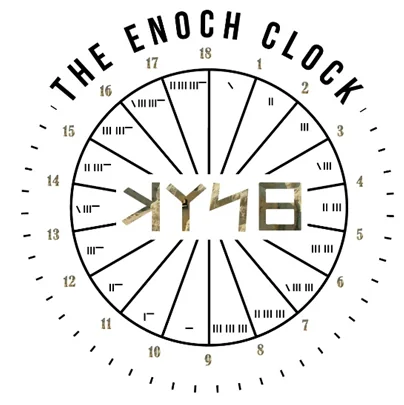
That sits naturally with The Enoch Clock’s parent line:
Ancient time. Ancient words. Passed on.
Frequently asked questions
What makes Christian wall decor meaningful?
Meaning is personal rather than automatic. A household may value a piece because the Scripture has particular significance, because it connects with family history or because the words are ones they deliberately want to keep visible. The decor itself should not be credited with producing spiritual or family outcomes.
Which Bible verses work well as wall art?
There is no universal list. Deuteronomy 6:6–9, Psalm 78:1–7, Joshua 24:15, Psalm 27:1 and Philippians 4:6–7 are examples families may consider for different reasons. Read the full passage before choosing an excerpt.
Should I quote the whole Bible verse?
Not necessarily. A complete short verse or complete clause may work well, provided the shortened wording does not distort the meaning. Keep the reference visible and check the final text against the chosen translation.
Which Bible translation should be used for Scripture wall art?
Use the translation preferred by the household and verify the exact wording. Where the text will be reproduced publicly or commercially, check the relevant publisher’s copyright, attribution and permissions terms.
Can Christian wall decor be given as a gift?
Yes, but it is worth knowing the recipient’s preferences first. Translation, passage, style and whether the household wants religious wall art are all more useful considerations than choosing a generic verse simply because it is widely sold.