How should prayer fit into the passing days, weeks and seasons? Scripture offers a starting point that is older than the familiar calendars of later churches: the appointed times given to the descendants of Jacob, alongside examples of prayer, remembrance and instruction in everyday life.
These subjects are closely related, but they are not identical. Some passages establish appointed observances. Others describe how faithful people prayed. Still others encourage families to keep the words of Scripture close, speaking and remembering them throughout the day.
Understanding those distinctions can help us develop a daily practice informed by Scripture without inventing new commandments.
What are the appointed times in Scripture?
Leviticus 23 introduces appointed times that Israel was instructed to proclaim. The chapter begins with the seventh-day Sabbath, then sets out further appointed observances across the year.
These include Passover, the Feast of Unleavened Bread, the presentation of firstfruits, the Feast of Weeks, the memorial of trumpet-blowing, the Day of Atonement and the Feast of Booths.
Each has its own instructions and significance. They should not be treated as interchangeable celebrations, nor reduced to a general idea of recognising the seasons.
For example, Passover recalls the deliverance from Egypt. The Feast of Unleavened Bread has its own instructions concerning food and the appointed days. The Feast of Booths includes remembrance of the dwellings associated with Israel’s journey after leaving Egypt.
Deuteronomy 16 revisits important annual observances and explicitly connects them with remembrance, rejoicing and gathering before the Most High.
The first task, therefore, is to read what each passage actually instructs: who is being addressed, what is appointed, what is to be remembered and what actions are described.
Are appointed times the same as daily prayer?
No. The appointed times establish particular observances. Daily prayer is a related but distinct subject.
Numbers 28 describes regular morning and evening offerings within Israel’s worship. These instructions concern offerings and should not simply be renamed a universal timetable for private prayer.
Elsewhere, Scripture gives examples of people praying at recurring times.
Psalm 55:17 speaks of calling out in the evening, morning and at noon. Daniel 6:10 describes Daniel kneeling to pray and give thanks three times a day, continuing a practice he already followed.
These passages show that recurring prayer was part of scriptural life. They do not, by themselves, establish a requirement that every household must pray at three specified hours.
A family may choose regular moments for prayer because repetition helps make the practice familiar. The important distinction is between following an example and claiming that a particular household routine has been directly commanded.
What does Scripture say about speaking its words aloud?
Joshua 1:8 is particularly striking. Joshua is instructed that the book of instruction should not depart from his mouth, and that he should meditate upon it day and night so that he may carefully do what is written.
The reference to the mouth is important. The underlying expression associated with meditation can involve murmuring or recitation, not only silent thought.
This helps explain why reading aloud has such a meaningful place in the life of a household. Words spoken and heard can be returned to repeatedly, even by children who cannot yet read independently.
Deuteronomy 6 likewise instructs Israel to teach the words diligently to their children and speak of them while sitting at home, walking on the road, lying down and rising.
Deuteronomy 31:10–13 describes a public reading of the instruction at an appointed gathering. Men, women, children and resident outsiders were to hear, learn and respond to the words.
These passages make the connection between time and instruction especially clear: the words were not intended to be encountered only once. They were to be remembered and passed between generations.
Incorporating biblical appointed times into daily prayer life
Some readers may describe this as incorporating biblical seasons into daily prayer life. Here, “biblical seasons” means the appointed times described in Scripture—not weather seasons or the later liturgical calendars developed by churches.
There is no need to invent a mandatory prayer formula or set an arbitrary number of minutes.
A household wishing to establish a consistent practice could use a simple sequence:
- Read: choose a passage of Scripture and read it aloud, allowing children to join in where they can.
- Listen: notice the actual words, repeated phrases, commands, promises or questions in the passage.
- Pray: respond with thanksgiving, praise, confession or requests appropriate to the passage and the family’s circumstances.
- Remember: return to a phrase or passage later, perhaps at another natural point in the day.
This is a suggested household practice, not a scripturally prescribed four-step order.
For young children, even a short reading can become familiar through repetition. An older child may read a few sentences aloud while a younger child listens nearby.
The aim is not to finish a passage quickly. It is to become increasingly familiar with what Scripture actually says.
How can appointed times shape family reflection?
An appointed time offers an opportunity to return to the passage that establishes it, understand its instructions and remember the events or responsibilities associated with it.
At Passover, for example, a family studying Exodus 12 can consider the deliverance from Egypt and the instructions given to Israelite households.
In studying the Feast of Weeks, a family can return to Leviticus 23 and Deuteronomy 16 to examine the counting, the offerings and the rejoicing described in those passages.
In studying the Feast of Booths, families can explore the relationship between temporary dwellings and the remembrance of Israel’s journey.
These are examples of passages to study, not a claim that the same modern household activities are directly commanded of every reader.
It is also important to distinguish instructions involving the sanctuary, priesthood and sacrifices from practices that a household can undertake today. Reading about an ancient offering is not the same thing as performing it.
Questions about present-day observance require careful consideration of the actual commands, their historical setting and the wider scriptural witness. They should not be settled by inventing a convenient modern equivalent.
Where does the Book of Enoch fit into the study of ancient time?
The Astronomical Book, found in 1 Enoch 72–82, is an important ancient witness to the relationship between heavenly movements, reckoning days and the ordering of the year.
It describes a structured year of 364 days. Related calendrical arrangements also appear in writings from the Second Temple period and among the Dead Sea Scrolls.
This material matters for understanding how some ancient communities and writers approached sacred time. It also shows that questions of calendars and the correct reckoning of days were being explored long before later church liturgical systems took their familiar forms.
Nevertheless, the biblical appointed times, the Astronomical Book’s calendrical descriptions and modern calendar calculations should not be treated as if they were the same kind of textual instruction.
Nor does the existence of an ancient 364-day model, by itself, settle every question about how its days should be mapped onto a modern civil calendar.
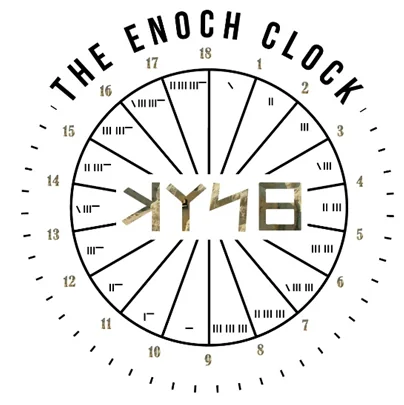
The Enoch Clock’s interest in ancient time includes taking these sources seriously while distinguishing what a text states, what historical evidence supports and what remains a matter of interpretation.
How do later church seasons differ?
Many churches organise their worship through calendars containing seasons such as Advent, Lent, Easter and Ordinary Time. These are later ecclesiastical structures, developed and used differently across Christian communities.
They are not the appointed-time calendar set out in Leviticus 23.
That distinction does not require dismissing the sincerity of people who follow later calendars. It simply means their historical practices should be described accurately rather than presented as biblical appointments established for Israel.
A reader looking for a particular church’s liturgical practices should consult that community’s own historical and liturgical resources. Those resources explain that community’s traditions; they do not replace the scriptural passages establishing ancient appointed times.
For The Enoch Clock, the governing approach is to begin with Scripture and examine subsequent traditions in their proper historical context.
Reading Scripture with children throughout the year
A family need not wait for an annual observance to read Scripture together.
Deuteronomy 6 describes instruction woven through ordinary household life. Joshua 1:8 joins speaking and meditation with careful attention to what is written. Deuteronomy 31 describes children hearing the instruction in a wider gathering.
Those passages offer a compelling reason to make reading aloud familiar rather than exceptional.
One child might recognise a repeated word. Another might ask what an unfamiliar expression means. A younger child might simply listen and gradually remember the sound of the passage.
That kind of encounter is also behind Little Questions, Ancient Words, a collection of short animated family conversations arising from reading Deuteronomy aloud.
The purpose is not to replace the full scriptural text with simplified stories. It is to help children grow comfortable hearing, speaking and returning to the words themselves.
Frequently asked questions
What are the appointed times in the Bible?
Leviticus 23 sets out the seventh-day Sabbath and several annual appointed observances given to Israel. Numbers 28–29 and Deuteronomy 16 provide further instructions concerning offerings and particular festivals. Each passage should be read in its own context.
Does the Bible require prayer at certain hours every day?
Scripture records recurring prayer at particular times, including the practices described in Psalm 55:17 and Daniel 6:10. These examples should not automatically be turned into a single compulsory daily schedule for every household.
Is the Sabbath the same as a later church season?
No. The seventh-day Sabbath is directly included among the appointed times in Leviticus 23. Later church seasons belong to different historical developments and should not be treated as identical to that instruction.
Does the Book of Enoch establish today’s calendar dates?
The Astronomical Book of Enoch presents a 364-day calendrical framework. Studying that framework is important for understanding ancient timekeeping, but identifying a specific contemporary calendar application involves additional textual, historical and calendrical decisions.
Can children participate in daily Scripture reading?
Yes. Deuteronomy 6 and 31 explicitly connect the hearing of instruction with teaching children. Reading aloud allows young children to participate through listening, repeating familiar phrases and eventually reading portions themselves.
How should I begin?
Start with a passage. Read it carefully, return to its actual words, and make room for prayer and questions. When studying an appointed time, begin with the text that establishes it rather than assuming a later calendar supplies its meaning.
Begin with the words
The question is not simply which dates to place on a calendar. It is what Scripture actually appoints, what it asks people to remember and how its words become familiar across generations.
Appointed times deserve careful study. Prayer can become a regular part of daily life. And a child can begin hearing and speaking Scripture long before being able to study every difficult passage independently.
Ancient time and ancient words belong together. Our responsibility is to distinguish what has been given in the text from what later generations have added, interpreted or practised.