The historical evidence for the 52 week calendar is real, but it needs careful definition.
Fifty-two seven-day weeks equal 364 days. Ancient texts associated with the Enochic calendrical tradition preserve a 364-day year, and calendrical manuscripts among the Dead Sea Scrolls show sustained interest in that structure.
What the evidence does not establish is that every ancient community used the same calendar, that 364 numbered days equal the observed solar year, or that the ancient sources give one uncontested method for keeping the scheme aligned with the seasons.
Those are separate historical questions.
First: 52 weeks is an arithmetic structure
The arithmetic is straightforward:
52 × 7 = 364 days
That produces a year made of complete seven-day weeks.
It does not mean that the observed seasonal year lasts exactly 364 days.
The modern tropical year is approximately 365.24 days, so a repeating 364-day count will move relative to the seasons unless some form of reconciliation is used.
This distinction between the numbered structure and astronomical alignment is essential.
The seven-day week and the 364-day year are different claims
The antiquity of the seven-day week does not by itself prove the antiquity of a 52-week annual calendar.
A society can use seven-day weeks without organising its entire year into exactly fifty-two of them.
Likewise, evidence for Sabbaths or repeating seven-day cycles should not automatically be cited as evidence that a particular 364-day annual system was in use.
The stronger historical case for a 364-day year comes from specific ancient texts rather than from the existence of the week alone.
What does 1 Enoch contribute?
The section of 1 Enoch commonly called the Book of Luminaries or Astronomical Book is found in chapters 72–82.
It describes the movements of the heavenly lights, changing lengths of day and night and an ordered annual structure.
The Enochic year can be expressed as four quarters of 91 days:
91 + 91 + 91 + 91 = 364 days
Within that structure, the months can be represented as a repeating pattern of:
30 days · 30 days · 31 days
Repeated four times, that produces twelve months and 364 numbered days.
Because 364 divides exactly by seven, the numbered structure contains fifty-two complete weeks.
What do the Aramaic manuscripts add?
Fragments of older Aramaic astronomical material were found among the Dead Sea Scrolls and are commonly identified as 4Q208–4Q211.
They are important because they show that Enochic astronomical and calendrical material existed in Aramaic centuries before the surviving complete Ethiopic form of 1 Enoch.
They should not, however, be described as though every surviving Aramaic fragment were simply an identical copy of 1 Enoch 72–82.
The relationship between the Aramaic astronomical material and the later Ethiopic Book of Luminaries is more complicated than that.
What do other Dead Sea Scroll calendrical texts show?
A number of manuscripts among the Dead Sea Scrolls use or presuppose 364-day calendrical structures.
Some coordinate dates with festivals, Sabbaths, priestly courses or other repeating cycles.
That materially strengthens the historical case that 364-day calendrical thinking belonged to the Second Temple period and was not invented by modern readers of Enoch.
It does not prove that every group represented by the surviving manuscripts followed one identical calendar in daily life.
Nor should manuscript preservation automatically be converted into a claim that one clearly identifiable community authored, used or endorsed every surviving calendrical text.
Does the 364-day structure stay aligned with the seasons automatically?
No.
This is the central difficulty.
A 364-day numbered year is shorter than the observed seasonal year.
If one simply repeated 364 numbered days indefinitely without adjustment, the calendar would move relative to the seasons.
The ancient sources and surviving manuscripts therefore leave an important question for modern readers and scholars: how was the difference understood or managed?
The existence of the 364-day structure is well evidenced.
The exact historical method by which every ancient user may have reconciled that structure with the observed seasonal year is not established with the same certainty.
A modern 52-week calendar shows the arithmetic problem clearly
The National Retail Federation’s modern 4-5-4 calendar offers a useful arithmetic comparison, although it is not evidence for ancient practice.
Its ordinary structure contains fifty-two seven-day weeks, or 364 days.
Because that does not equal the civil year, the system periodically uses a 53rd week for retail reporting.
The lesson is limited but useful: a neat 52-week structure and a year that remains aligned with an external annual cycle are not automatically the same thing.
What happened in Britain in 1752?
Britain’s adoption of the Gregorian calendar in 1752 illustrates a different point.
The civil date moved from 2 September to 14 September, removing eleven numbered dates from that month.
The sequence of weekdays continued across the change.
This is evidence that civil date labels can be reformed without requiring the seven-day sequence itself to be restarted.
It does not prove a 364-day ancient calendar, but it is useful when distinguishing a weekly cycle from the structure of months and years.
Was there one ancient calendar?
The surviving evidence does not justify that conclusion.
Ancient Israelite and Second Temple-period calendrical evidence is diverse.
Different textual traditions preserve different ways of reckoning months, festivals, seasons and years.
It is therefore more precise to speak of an Enochic 364-day calendrical tradition than of “the ancient calendar” as though the historical evidence were uniform.
Where does the Master Enoch Clock fit?
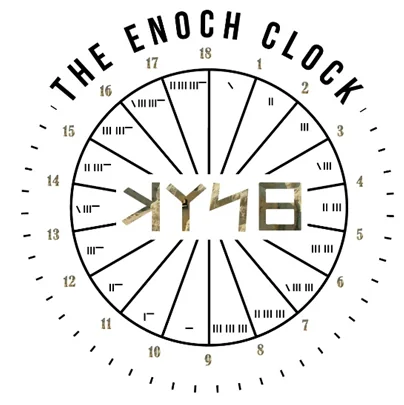
The Master Enoch Clock is a modern digital system for exploring The Enoch Clock’s interpretation of the Enochic 364-day tradition.
It keeps the 364 numbered days intact while using a modern geometric solar reference in its calculations.
The modern system also has to address the difference between 364 numbered days and the observed return of the seasons.
When needed, it uses what The Enoch Clock calls the Solar Renewal Wait: one or two unnumbered sunset-to-sunset days may occur after Day 363 before the spring solar balance whose sunset begins Day 364. The following sunset begins Day 1.
This is a modern operational interpretation.
It is not presented as an additional command written in the Book of Enoch.
So is the 52-week calendar historically accurate?
If “historically accurate” means that ancient Enochic and related Second Temple-period texts genuinely preserve a 364-day structure containing fifty-two complete weeks, the answer is yes.
If it means that every ancient community followed that system, the answer is no: the surviving evidence does not establish universal practice.
If it means that fifty-two weeks automatically equal the observed solar year, the answer is also no.
The historically careful conclusion is narrower and stronger:
A 364-day, fifty-two-week calendrical tradition is genuinely ancient. How that structure related in practice to the longer observed seasonal year remains a separate and contested question.
Frequently asked questions
How many days are in 52 weeks?
Fifty-two seven-day weeks contain 364 days.
Does 364 days equal a solar year?
No. The observed tropical year is approximately 365.24 days, so an indefinitely repeated 364-day count would move relative to the seasons unless some method of reconciliation were used.
Does 1 Enoch contain a 364-day calendar?
The Book of Luminaries in 1 Enoch presents an ordered 364-day year associated with the movements of the heavenly lights and changing lengths of day and night.
Do the Dead Sea Scrolls contain 364-day calendar material?
Yes. Several calendrical manuscripts use or presuppose 364-day structures, and Aramaic astronomical manuscripts related to the Enochic tradition also survive among the Scrolls.
Did every ancient community use this calendar?
No such universal conclusion is supported by the surviving evidence. It is safer to speak about a particular Enochic and Second Temple-period 364-day tradition.
Is the Solar Renewal Wait written in 1 Enoch?
No. It is the Master Enoch Clock’s modern operational method for reconciling its numbered 364-day framework with its solar reference. It is not presented as an ancient command.